

1.1.1: What is computer equipment called?
1.1.2: What does it take to write a complex program?
1.2.1: What part of the computer executes instructions?
1.2.2: What type of storage persists without electricity?

1.4.1: What consists of a large number of simple CPU instructions?
1.4.2: Determine what is not a characteristic of Python.

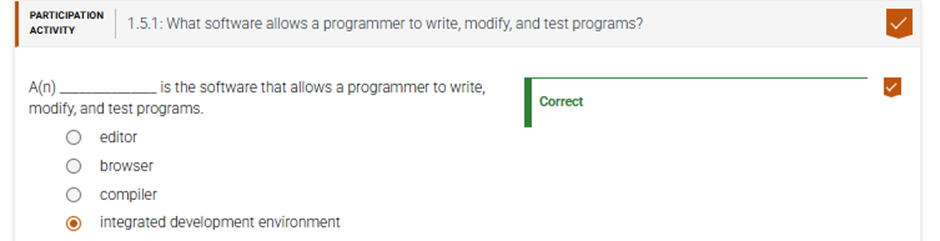
1.5.1: What software allows a programmer to write, modify, and test programs?
1.5.2: What is used to execute a Python program?

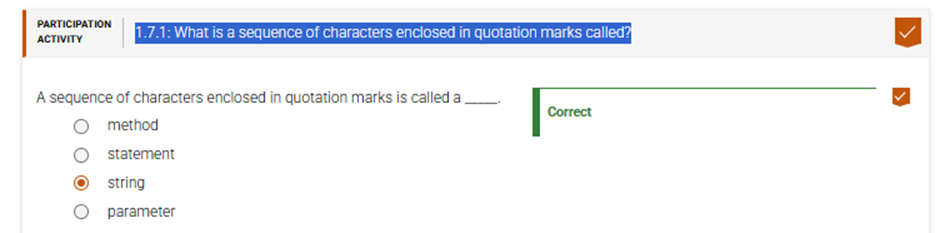
1.7.1: What is a sequence of characters enclosed in quotation marks called?
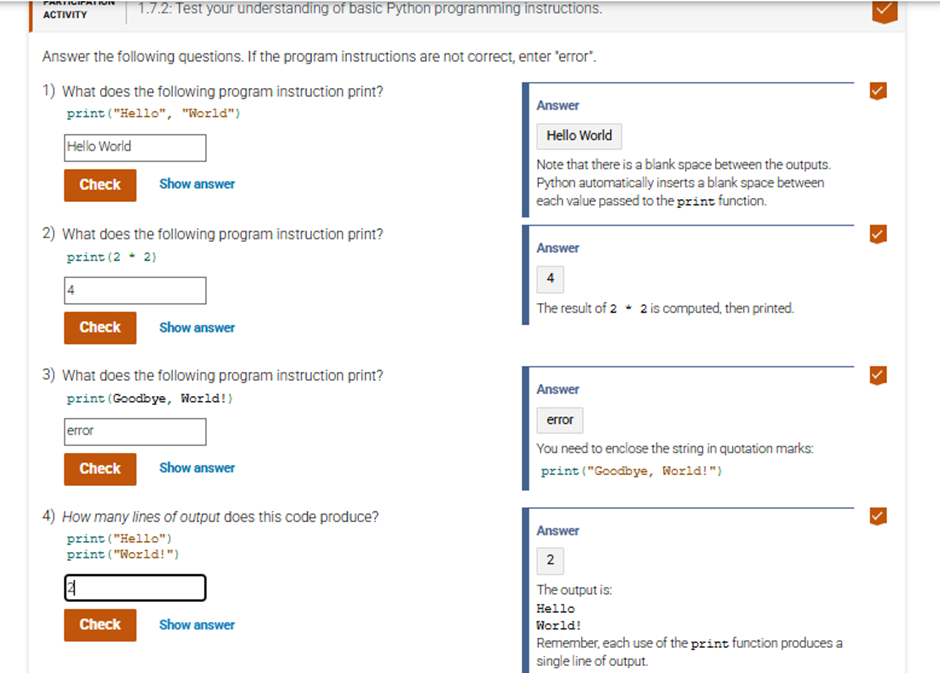
1.7.2: Test your understanding of basic Python programming instructions.
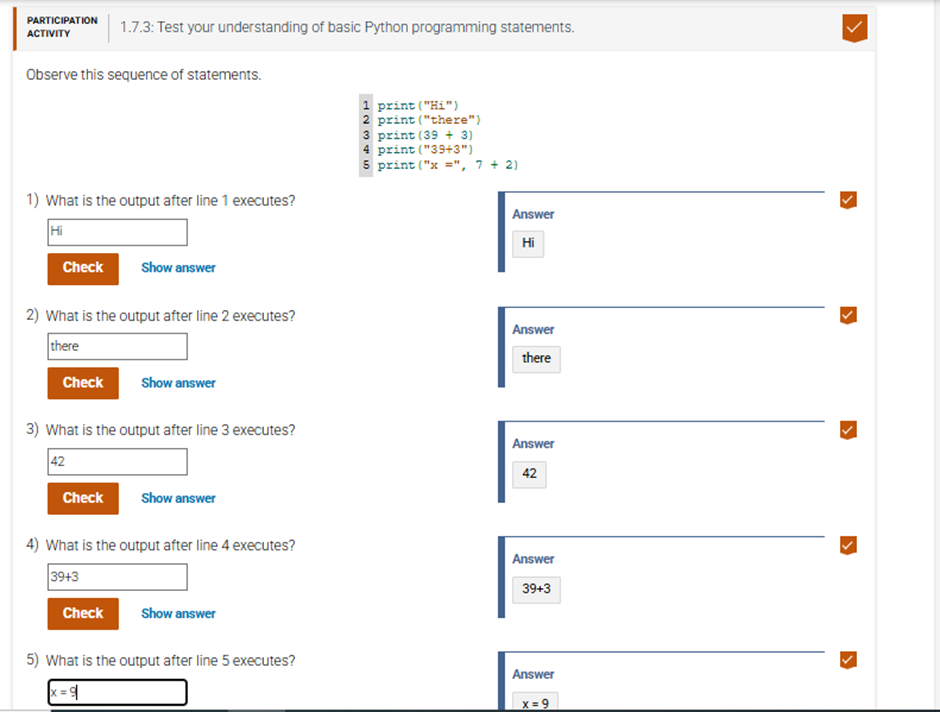
1.7.3: Test your understanding of basic Python programming statements.
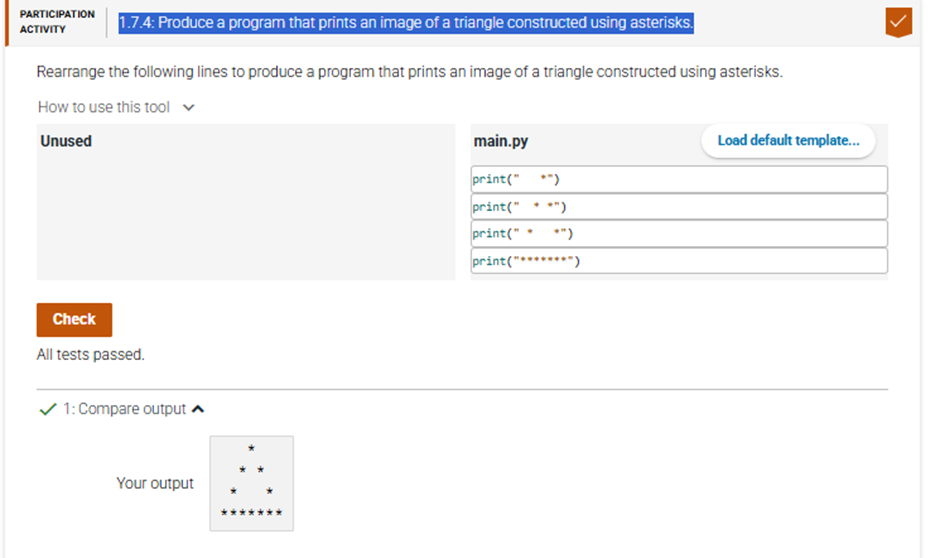
1.7.4: Produce a program that prints an image of a triangle constructed using asterisks.
1.7.5: Complete this program to print two lines.
Complete the program below so that it displays a second line showing “Hello, All!” below the first line of “Hello, World!”. In other words, the output of this program should match the following:
Hello, World!
Hello, All!
# A program to print two lines
print(“Hello, World!”)
# Your code goes here
print(“Hello, All!”)
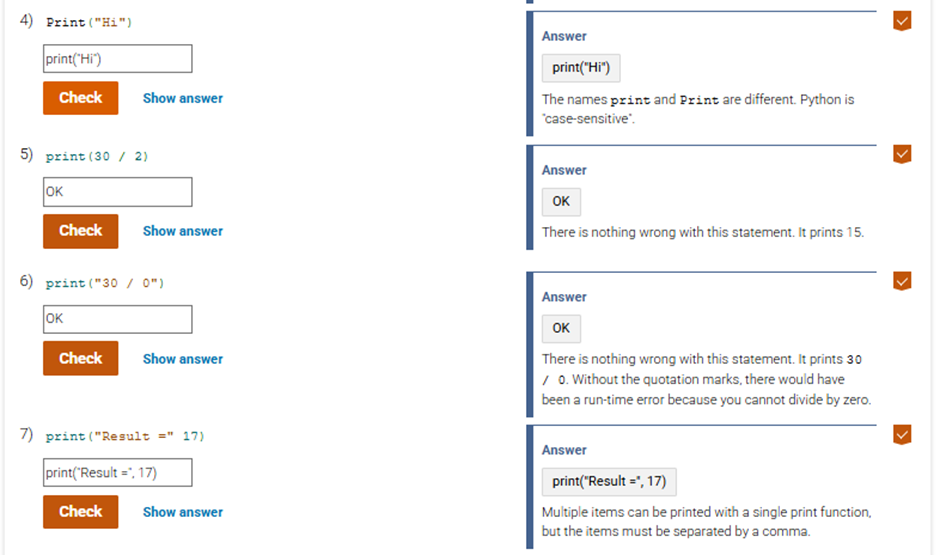
1.8.1: Correct the error in each of the code fragments.

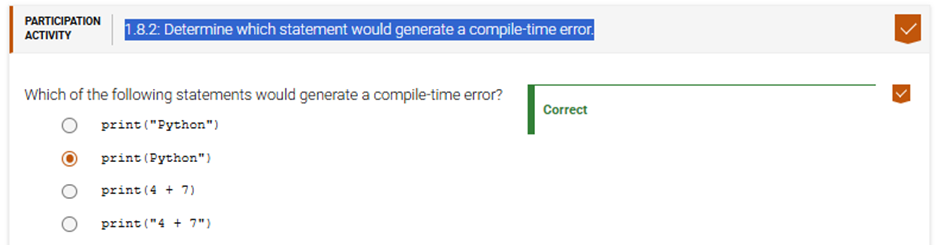
1.8.2: Determine which statement would generate a compile-time error.
1.8.3: Which statement is syntactically correct but logically inconsistent?

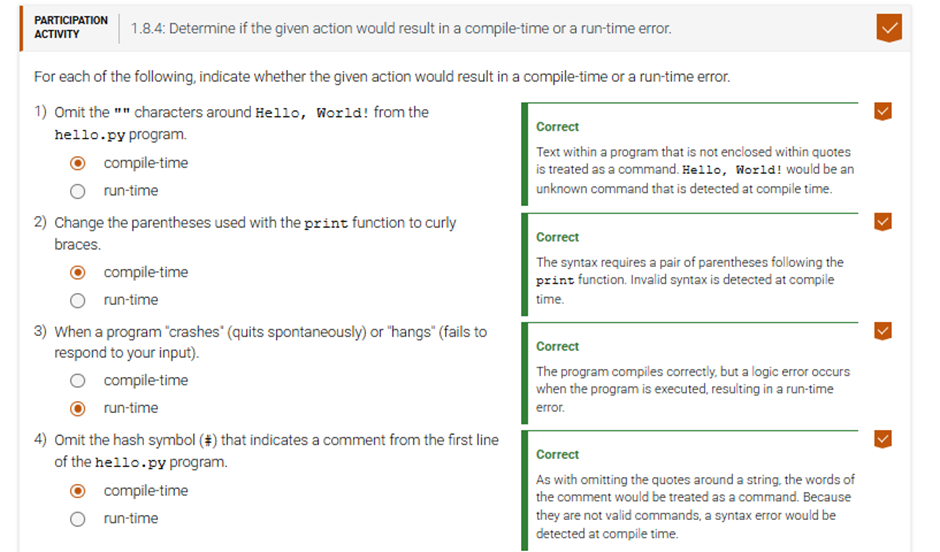
1.8.4: Determine if the given action would result in a compile-time or a run-time error.
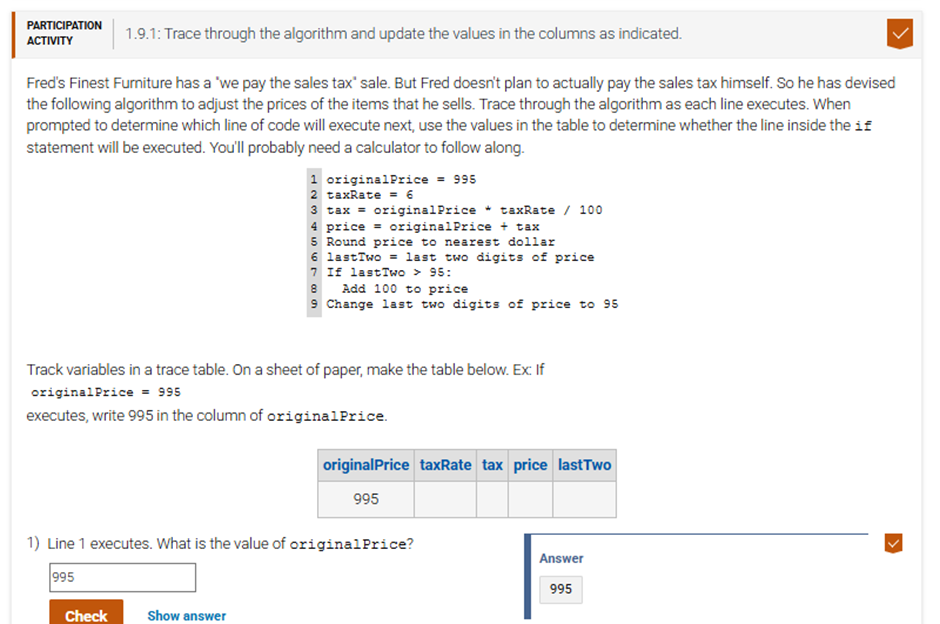
1.9.1: Trace through the algorithm and update the values in the columns as indicated.

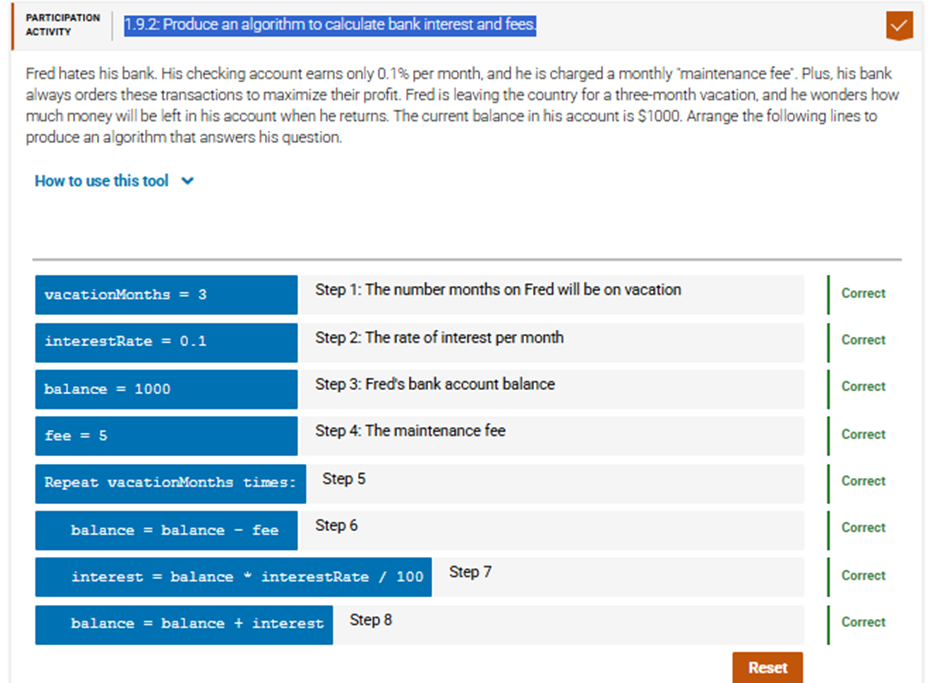
1.9.2: Produce an algorithm to calculate bank interest and fees.
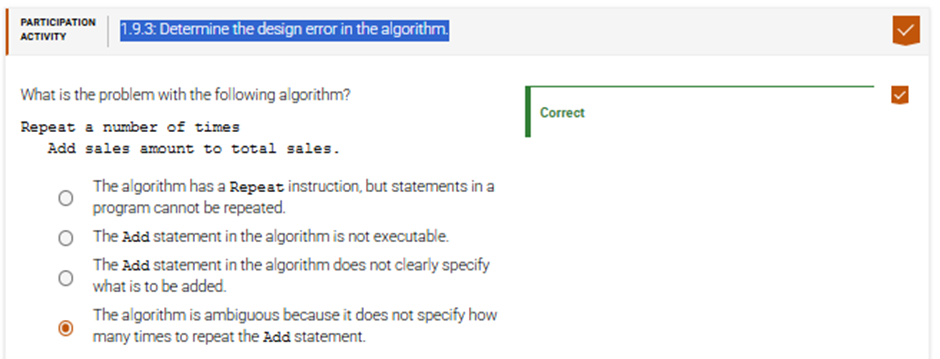
1.9.3: Determine the design error in the algorithm.
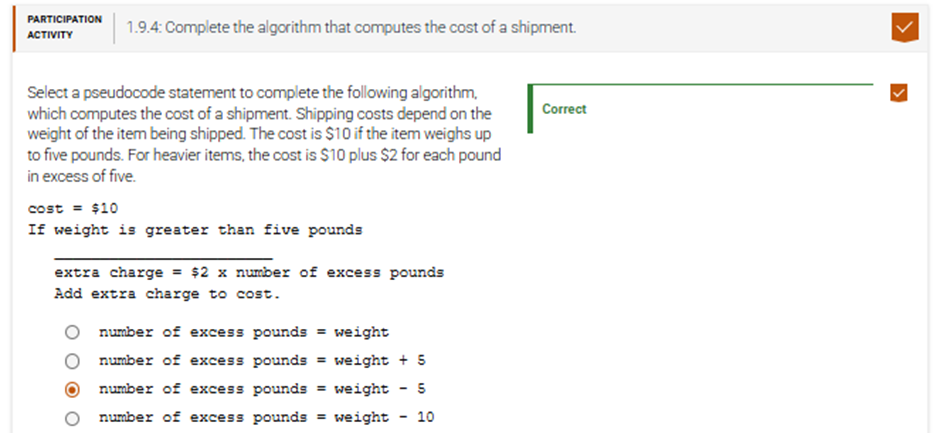
1.9.4: Complete the algorithm that computes the cost of a shipment.
1.14.1: Why is a CD player less flexible than a computer?
1.15.1: Where is a program stored when it is not running?
1.16.1: Why don’t you write a program directly in CPU instructions?
1.17.1: Determine which statement is false.

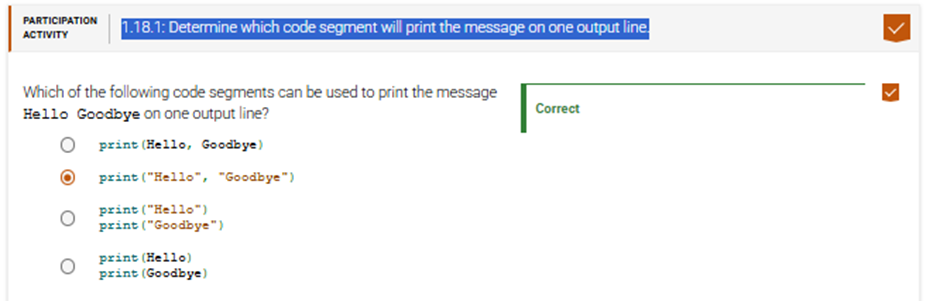
1.18.1: Determine which code segment will print the message on one output line.
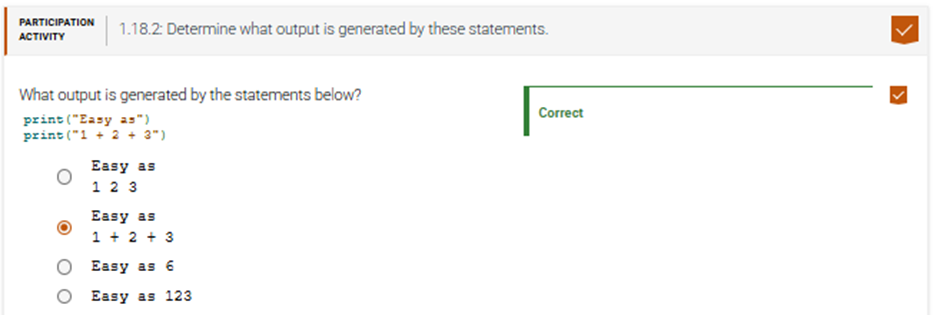
1.18.2: Determine what output is generated by these statements.
1.18.1: Produce a program that prints a farewell message.

1.18.2: Complete the program to print out a filled triangle four lines high.
Complete the program below to print out a filled triangle four lines high. In other words, the output of this program should match the following, exactly:
x xxx xxxxxxxxxxxxprint(” x”)
# Your code goes here
print(” xxx”)
print(” xxxxx”)
print(“xxxxxxx”)
1.18.3: Complete the program to print out the last three lines.
Complete the program below to print out the last three lines of a poem by Robert Frost.
Two roads diverged in a wood, and I --I took the one less traveled by,And that has made all the difference. by Robert Frost# Your code goes here
print(“Two roads diverged in a wood, and I –“)
print(“I took the one less traveled by,”)
print(“And that has made all the difference.”)
print(” by Robert Frost”)
1.19.1: What type of error is produced by the given program?

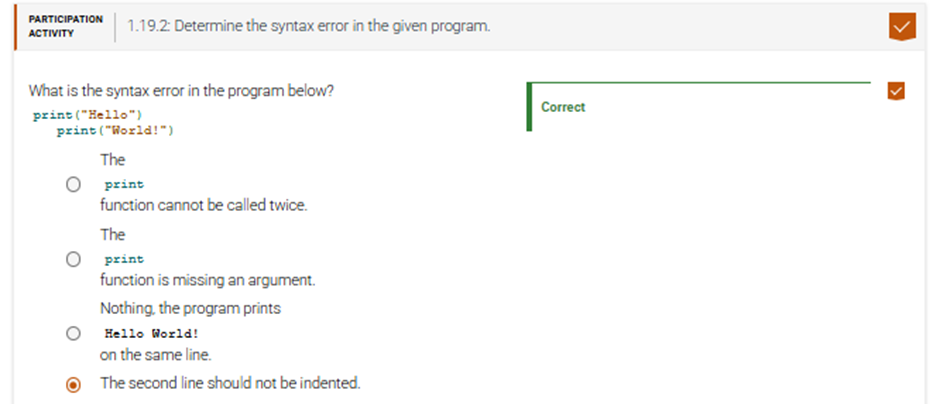
1.19.2: Determine the syntax error in the given program.
1.19.1: Fix the syntax and logic errors so the program produces the correct output.
The following program is supposed to print
The itsy bitsy spider climbed up the waterspout.
Down came the rain
and washed the spider out.
# Print a message to the terminal.
print(“The itsy bitsy spider climbed up the waterspout.”)
print(“Down came the rain”)
print(“and washed the spider out.”)
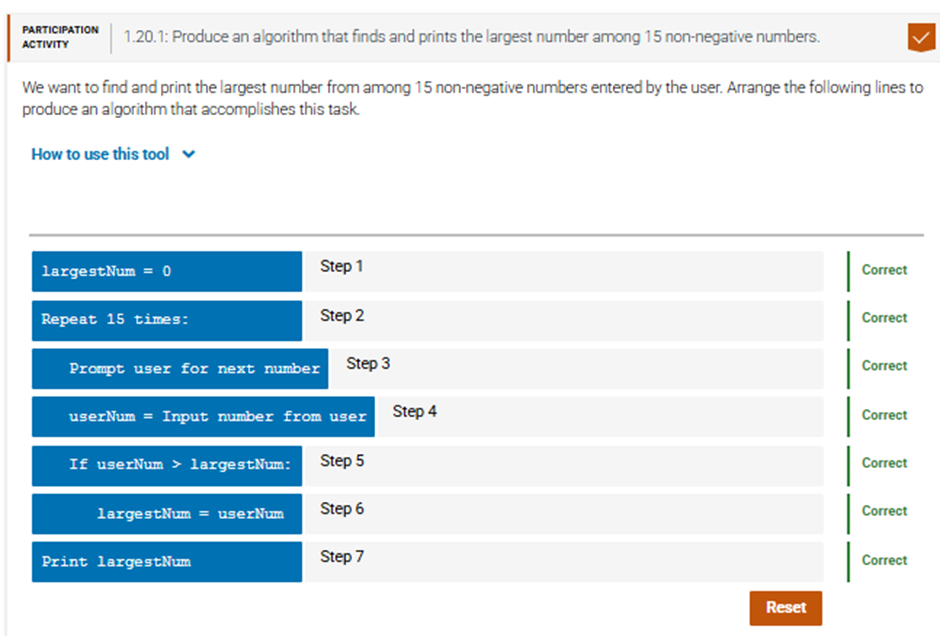
1.20.1: Produce an algorithm that finds and prints the largest number among 15 non-negative numbers.
1.20.2: Develop an algorithm to translate Wiki markup into HTML.

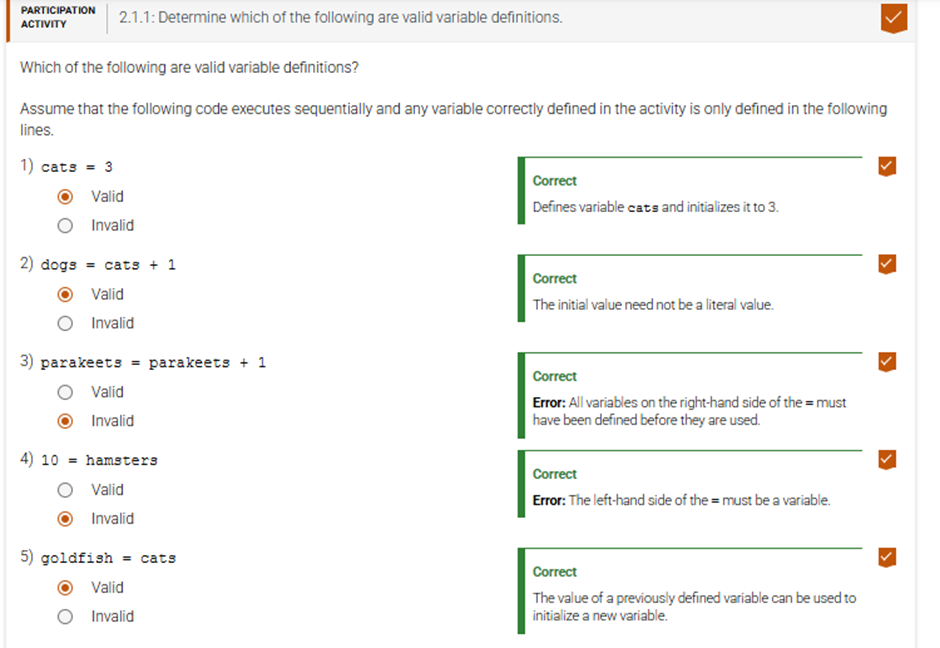
2.1.1: Determine which of the following are valid variable definitions.
2.1.2: Determine the data type of each of the following numbers.

2.1.3: Determine if the following are valid variable names.


2.1.4: Indicate whether it is appropriate to define a constant variable for the given value.

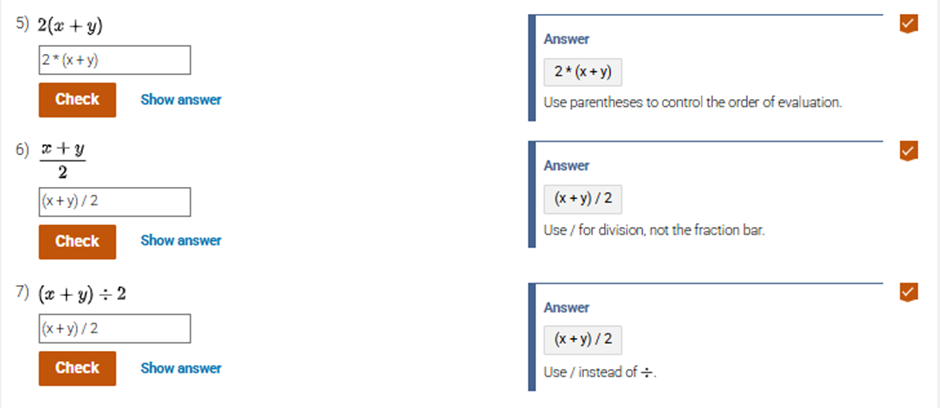
2.2.1: Translate the following expressions into Python.

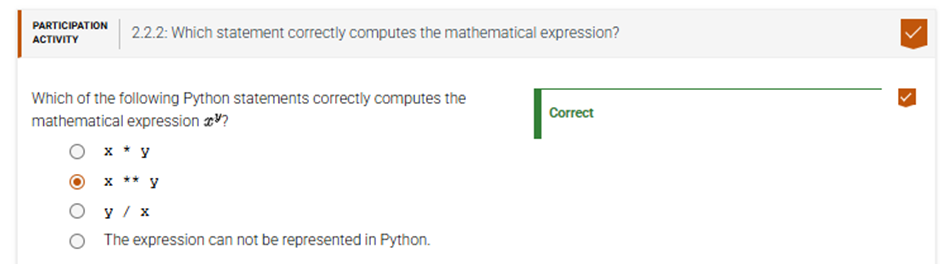
2.2.2: Which statement correctly computes the mathematical expression?
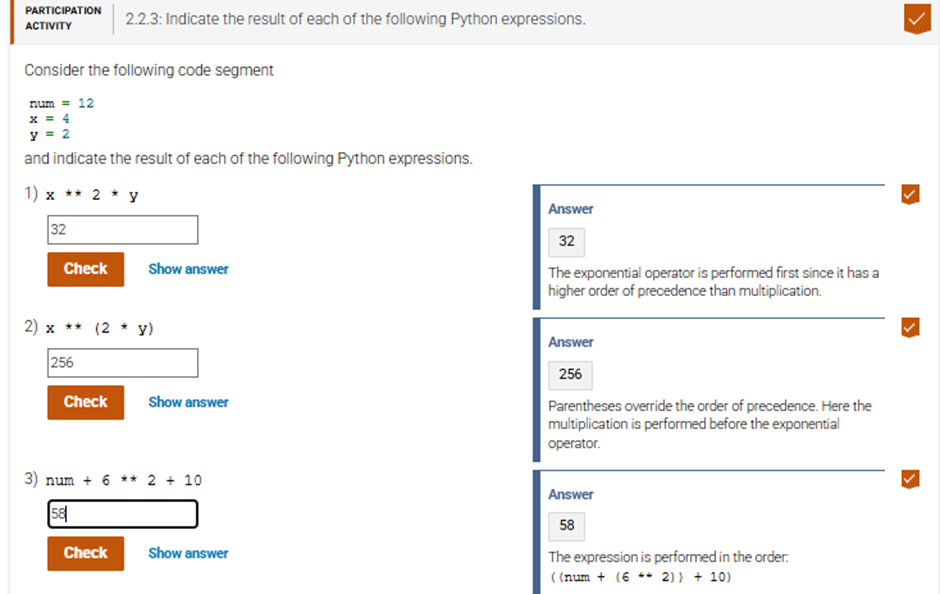
2.2.3: Indicate the result of each of the following Python expressions.
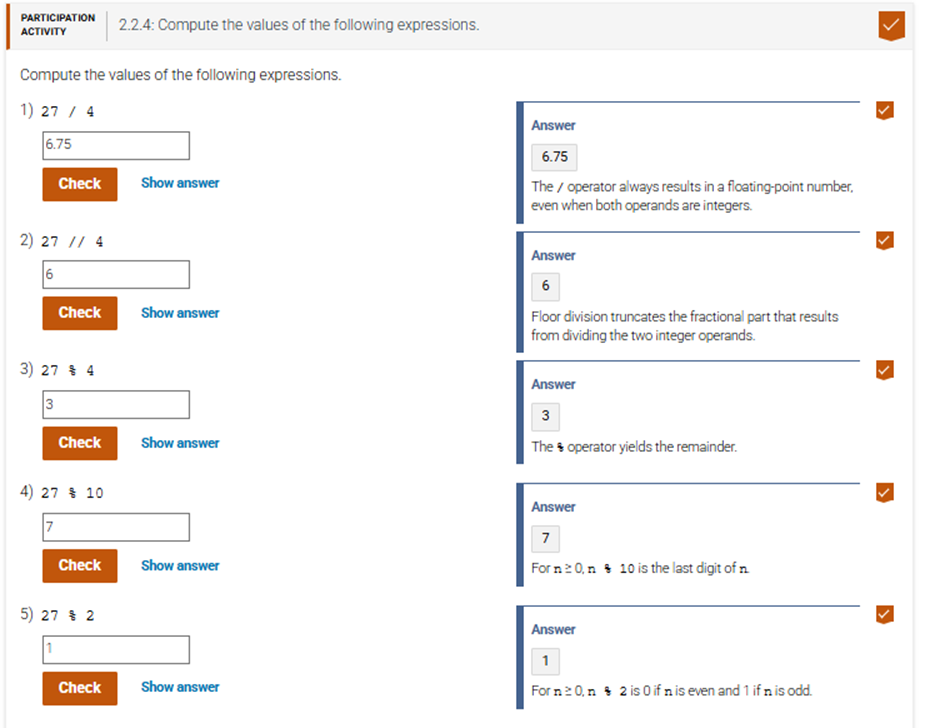
2.2.4: Compute the values of the following expressions.
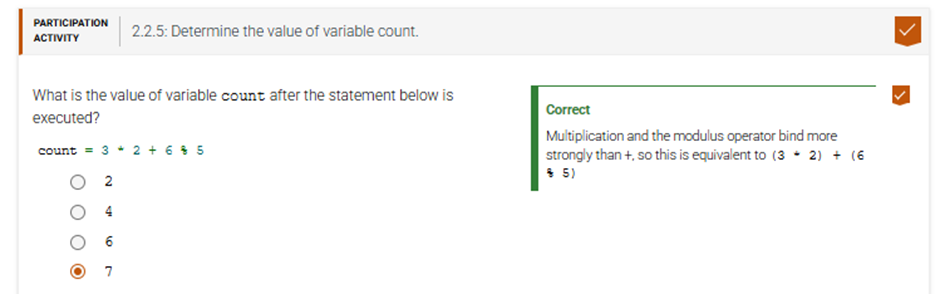
2.2.5: Determine the value of variable count.
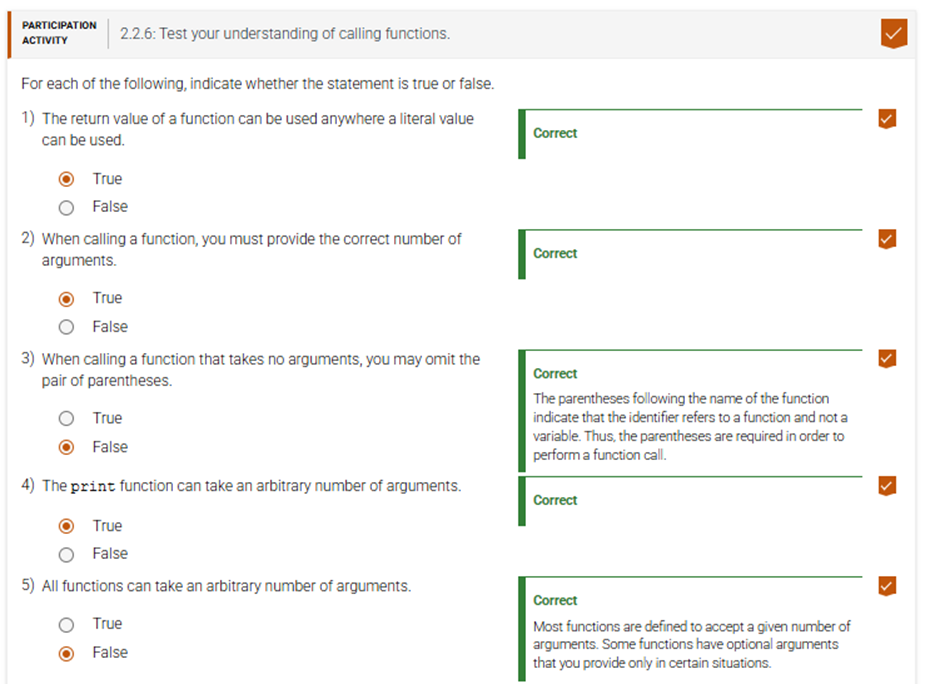
2.2.6: Test your understanding of calling functions.
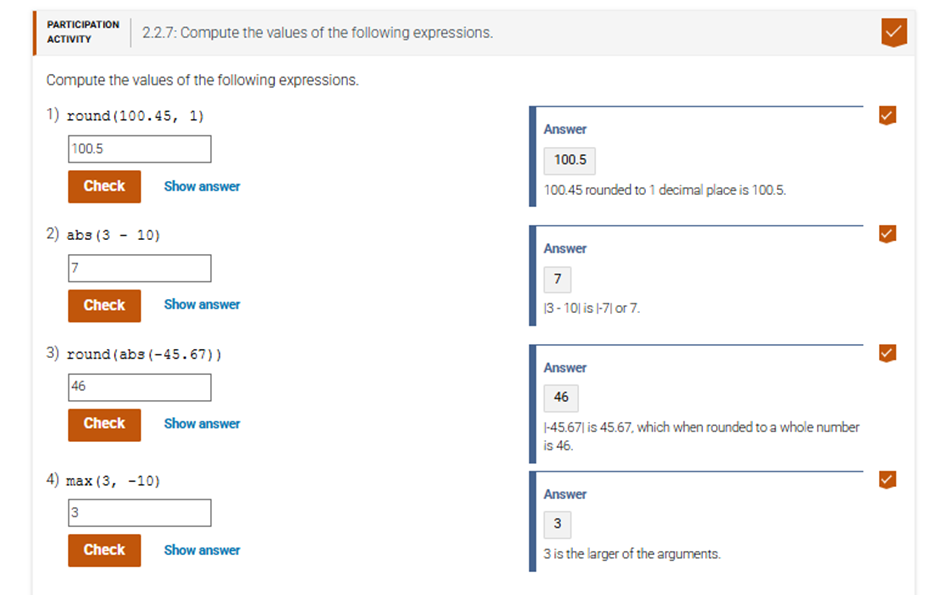
2.2.7: Compute the values of the following expressions.
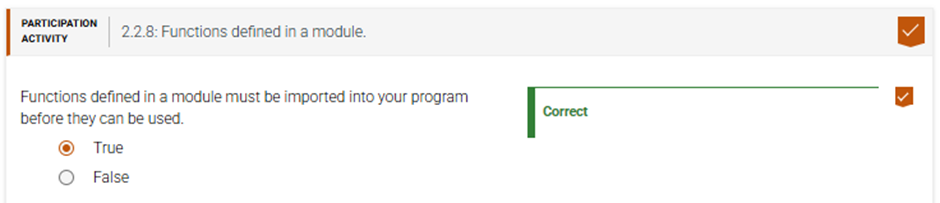
2.2.8: Functions defined in a module.
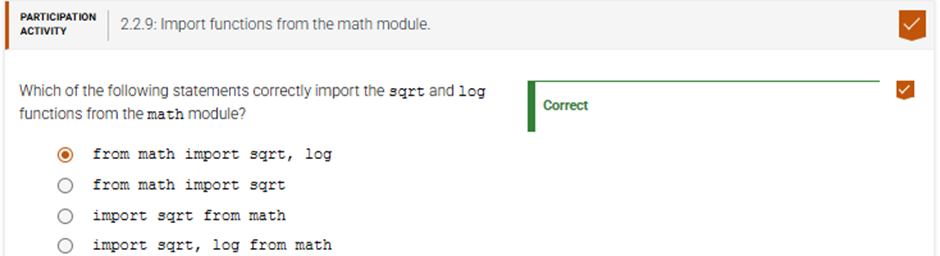
2.2.9: Import functions from the math module.
2.2.10: Translate expressions to Python.

2.6.1: Select the assignment statement that correctly implements the algorithmic step.

2.6.2: Calculate inflating a spherical balloon to a certain diameter.

2.6.3: Produce pseudocode that models inflating a spherical balloon.
