
Chapter 03 Use It
1). The following three tables make up a simple reservation system for a small campground. The database should allow for a camper to make multiple reservations for future dates and for a camping spot to have several reservations for upcoming visits.

2). The following three tables make up a simple reservation system for a small campground. The database should allow for a camper to make multiple reservations for future dates and for a camping spot to have several reservations for upcoming visits.
.png)
Quiz: Chapter 03 The Relational Database Model
1). Which of the following is not a valid characteristic of a relational table?
| a. It is perceived as a two-dimensional structure composed of rows and columns. |
| b. The order of the rows and columns is irrelevant to the DBMS. |
| c. Each table column represents an attribute and each column has a distinct name. |
| d. All values in a column may have different data formats. |
2). Which of the following statements best describes a functional dependency?
| a. The value of one or more attributes determines the value of one or more other attributes. |
| b. The condition in which each row in the table is dependent on any subset of the key. |
| c. The value of an attribute determines the value of one or more other attributes. |
| d. The data type of an attribute determines the data type of another attribute. |
3). Which of the following is not a legitimate DB key in a relational model?
| a. Candidate key |
| b. Secondary key |
| c. Superkey |
| d. Entity key |
4). Which of the following statements best defines the purpose of entity integrity?
a. Lacking a primary key, it enables each row to identify other rows in other tables. |
| b. It secures the null key in the absence of any data. |
| c. It guarantees each entity has a unique value for the primary key and that there are no null key values. |
| d. It validates each row will have a value identifying foreign key values in other tables. |
5). Dr. Codd published a list of 12 relational database rules in 1985; which of the following is not a valid rule?
| a. Every value in a table is guaranteed to be accessible through a combination of table name, primary key value, and column name. |
| b. The database must support set-level inserts, updates, and deletes. |
| c. Nulls must be represented and treated in a systematic way, independent of data type. |
| d. Any database view that is theoretically updatable must be updated outside of the database structure. |
6). Which of the following best describes an index?
| a. An index is an orderly arrangement used to logically access rows in a table. |
| b. It is a variable for holding database relation data, not the relation itself. |
| c. It has an attribute with a value that determines the value of other rows. |
| d. An index is an orderly arrangement used to physically access rows in a table. |
7). A composite entity is also referred to as a _____ entity.
| a. linking |
| b. transient |
| c. bridge |
| d. relationship |
9). Which of the following statements best defines a data dictionary?
| a. The data dictionary provides a detailed description of all entities in the database created by the user and designer. |
| b. The data dictionary provides a detailed description of all tables in the database created by the user and designer. |
| c. The data dictionary provides a detailed description of all tables in the database created by the developer and designer. |
| d. The data dictionary provides a detailed description of all entities in the database created by the developer and designer. |
10). Which of the following is not a valid relational set operator?
| a. ADD operator |
| b. DIFFERENCE operator |
| c. INTERSECT operator |
| d. UNION operator |
Chapter 04 Use It
1. Wynwood District
Provide all appropriate connectivities using the following business rules:
An art collector can purchase many artworks but a purchase order is placed by one art collector only.
An artist owns at least one artwork but a given artwork is owned by one artist only.
An artwork is classified into one art style only.
Each art style must have at least one artwork.An art collector may review/rate more than one artist.
.png)
1. Provide the appropriate connectivity using the above business rules for number 1
| a. ∞:1 |
| b. M:N |
| c. 1:∞ |
2. Provide the appropriate connectivity using the above business rules for number 2
| a. ∞:1 |
| b. 1:1 |
| c. 1:∞ |
3. Provide the appropriate connectivity using the above business rules for number 3
| a. ∞:1 |
| b. 1:1 |
| c. 1:∞ |
4. Provide the appropriate connectivity using the above business rules for number 4
| a. ∞:1 |
| b. M:N |
| c. 1:∞ |
5. Provide the appropriate connectivity using the above business rules for number 5
| a. ∞:1 |
| b. 1:1 |
| c. 1:∞ |
6. Provide the appropriate connectivity using the above business rules for number 6
| a. ∞:1 |
| b. 1:1 |
| c. 1:∞ |
7. Provide the appropriate connectivity using the above business rules for number 7
| a. ∞:1 |
| b. M:N |
| c. 1:∞ |
2. Book Club
Provide all appropriate connectivities using the following business rules:
A book is printed by one publisher only and a publisher prints many books.
A reader follows at least one author and an author may be followed by many readers.
A reader may be part of many reading groups and a reading group has at least one reader.
An author wrote at least one book and a book may have been written by many authors.
1. Provide the appropriate connectivity using the above business rules for number 1
| a. ∞:1 |
| b. 1:1 |
| c. 1:∞ |
2. Provide the appropriate connectivity using the above business rules for number 2
| a. ∞:1 |
| b. M:N |
| c. 1:∞ |
3. Provide the appropriate connectivity using the above business rules for number 3
| a. ∞:1 |
| b. 1:1 |
| c. 1:∞ |
4. Provide the appropriate connectivity using the above business rules for number 4
a. ∞:1 |
| b. 1:1 |
| c. 1:∞ |
5. Provide the appropriate connectivity using the above business rules for number 5
| a. ∞:1 |
| b. M:N |
| c. 1:∞ |
6. Provide the appropriate connectivity using the above business rules for number 6
| a. ∞:1 |
| b. 1:1 |
| c. 1:∞ |
7. Provide the appropriate connectivity using the above business rules for number 7
| a. ∞:1 |
| b. 1:1 |
| c. 1:∞ |
3. Tech Support
Using Crow’s Foot Model, provide all appropriate cardinalities using the following business rules:
Each staff is part of one of the five IT Teams (Helpdesk, Server, Network, Desktop, Email) and a team may have many staff members.
Each user will have the ability to submit as many tickets as needed, and each ticket must be tied to a single user.
Each ticket is assigned to at least one topic area but no more than three topics per ticket. A topic can include many tickets.
1. Using Crow’s Foot Model, provide the appropriate cardinalities using the above business rules for number 1
| a. (0,N) |
| b. (1,1) |
| c. (1,3) |
2. Using Crow’s Foot Model, provide the appropriate cardinalities using the above business rules for number 2
| a. (0,N) |
| b. (1,1) |
| c. (1,3) |
3. Using Crow’s Foot Model, provide the appropriate cardinalities using the above business rules for number 3
| a. (0,N) |
| b. (1,1) |
| c. (1,3) |
4. Using Crow’s Foot Model, provide the appropriate cardinalities using the above business rules for number 4
| a. (0,N) |
| b. (1,1) |
| c. (1,3) |
5. Using Crow’s Foot Model, provide the appropriate cardinalities using the above business rules for number 5
| a. (0,N) |
| b. (1,1) |
| c. (1,3) |
6. Using Crow’s Foot Model, provide the appropriate cardinalities using the above business rules for number 6
| a. (0,N) |
| b. (1,1) |
| c. (1,3) |
7. Using Crow’s Foot Model, provide the appropriate cardinalities using the above business rules for number 7
| a. (0,N) |
| b. (1,1) |
| c. (1,3) |
8. Using Crow’s Foot Model, provide the appropriate cardinalities using the above business rules for number 8
| a. (0,N) |
| b. (1,1) |
| c. (1,3) |
4. Traffic Ticket
Using Chen Model with the (min, max) notation, provide all appropriate cardinality using the following business rules:
A vehicle is owned by one and only driver. A driver owns at least one vehicle.
A law enforcement officer issues many fine tickets and a motorist may have received many fine tickets.
1. Using Chen Model with the (min, max) notation, provide the appropriate cardinality using the above business rules for number 1
| a. (0,N) |
| b. (1,1) |
| c. (N,M) |
| d. (1,M) |
| e. (0,P) |
2. Using Chen Model with the (min, max) notation, provide the appropriate cardinality using the above business rules for number 2
| a. (0,N) |
| b. (1,1) |
| c. (N,M) |
| d. (1,M) |
| e. (0,P) |
3. Using Chen Model with the (min, max) notation, provide the appropriate cardinality using the above business rules for number 3
| a. (0,N) |
| b. (1,1) |
| c. (N,M) |
| d. (1,M) |
| e. (0,P) |
4. Using Chen Model with the (min, max) notation, provide the appropriate cardinality using the above business rules for number 4
| a. (0,N) |
| b. (1,1) |
| c. (N,M) |
| d. (1,M) |
| e. (0,P) |
5. Using Chen Model with the (min, max) notation, provide the appropriate cardinality using the above business rules for number 5
| a. (0,N) |
| b. (1,1) |
| c. (N,M) |
| d. (1,M) |
| e. (0,P) |
5. Heath Clinics
Using Crow’s Foot Model, provide all appropriate connectivities using the following business rules:
A physician works at one and only one clinic location and a clinic has at least one physician worker.
A physician can prescribe one or more medications to several patients and a patient can obtain many prescriptions from several physicians.
1. Using Crow’s Foot Model, provide the appropriate connectivity using the above business rules for number 1

2. Using Crow’s Foot Model, provide the appropriate connectivity using the above business rules for number 2

3. Using Crow’s Foot Model, provide the appropriate connectivity using the above business rules for number 3
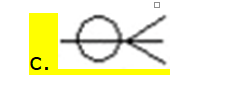
4. Using Crow’s Foot Model, provide the appropriate connectivity using the above business rules for number 4
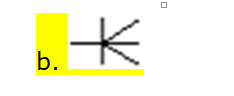
5. Using Crow’s Foot Model, provide the appropriate connectivity using the above business rules for number 5
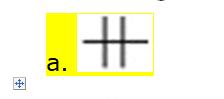
6. Lead Management
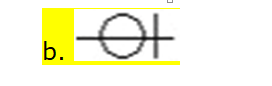
Using Crow’s Foot Model, provide the appropriate connectivity using the following business rules:
A property is owned by a single homeowner but a homeowner may have multiple properties.
A property may be purchased by one single buyer but a buyer can purchase many properties.
A real estate agent may manage more than one property at a time but a property is managed by one manager only.
1. Using Crow’s Foot Model, provide the appropriate connectivity using the above business rules for number 1

2. Using Crow’s Foot Model, provide the appropriate connectivity using the above business rules for number 2
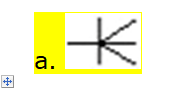
3. Using Crow’s Foot Model, provide the appropriate connectivity using the above business rules for number 3

4. Using Crow’s Foot Model, provide the appropriate connectivity using the above business rules for number 4

5. Using Crow’s Foot Model, provide the appropriate connectivity using the above business rules for number 5

6. Using Crow’s Foot Model, provide the appropriate connectivity using the above business rules for number 6
Quiz: Chapter 04 Entity Relationship (ER) Modeling
1).When working with entity relationship models (ERM), which of the following is not a valid statement regarding an entity?
| a. An entity is an object of interest to the end designer. |
| b. In the Chen, Crow’s Foot, and UML notations, an entity is represented by a rectangle that contains the entity name. |
| c. An entity refers to the entity set and not to a single entity occurrence. |
| d. The ERM refers to a table row as an entity instance or entity occurrence |
2). In an entity relationship model (ERM), attributes are characteristics of entities. Which of the following statements best describe an optional attribute?
| a. An optional attribute is an attribute that does not require a value and can be left empty. |
| b. An optional attribute is an attribute that requires a value and can be an optional key. |
| c. An optional attribute is an attribute that requires a value and can be left empty. |
| d. An optional attribute is an attribute that does not require a value and can be an optional key. |
3). What type of attribute allows for no more than one value?
| a. Single-valued attribute |
| b. Composite attribute |
| c. Multivalued attribute |
| d. Simple attribute |
4). The CUSTOMER entity includes the attributes CUST_LNAME, CUST_FNAME, CUST_PHONE, and CUST_PHONE_TYPE. The CUST_PHONE_TYPE attribute stores the string “HOME, WORK, MOBILE, OTHER”. Which term best describes CUST_PHONE_TYPE?
| a. Simple attribute |
| b. Composite attribute |
| c. Single-valued attribute |
| d. Multivalued attribute |
5). A derived attribute is an attribute whose value is calculated (derived) from other attributes. What is not an advantage of storing derived attributes in the database?
| a. Can keep track of historical data |
| b. Uses CPU processing cycles |
| c. Saves data access time |
| d. Data value is readily available |
6). What type of entity can exist in the database only when it is associated with another related entity?
| a. Regular entity |
| b. Existence-independent |
| c. Existence-dependent |
| d. Strong entity |
7). What element expresses the specific number of entity occurrences associated with an occurrence of a related entity?
| a. Connectivity |
| b. Existence dependence |
| c. Cardinality |
| d. Derived attributes |
8). A relationship degree indicates the number of entities or participants associated with a relationship. Which is not a valid relationship that’s specifically named?
| a. Binary relationship |
| b. Ternary relationship |
| c. Quarterly relationship |
| d. Unary relationship |
9). Database designers must often compromise design due to conflicting goals. What are examples of contradictory goals in database design?
a. Primary key, composite key, and foreign key |
| b. Chen notation, Crow’s Foot notation, and UML notations |
| c. Design standards, processing speed, and information requirements |
| d. Attributes, domains, and entitie |
10). While a relationship degree indicates the number of entities associated with a relationship, which relationship type is within a single entity type?
| a. Recursive relationship |
| b. Binary relationship |
| c. Higher-order relationship |
| d. Ternary relationship |
Quiz: Chapter 05 Advanced Data Modeling
1). When looking into the extended entity relationship model (EERM), which of the following statements is not valid about entity supertypes and subtypes?
| a. Entity supertype and subtype are based on a hierarchical structure. |
| b. The entity supertype contains common characteristics with subtype. |
| c. The entity subtype contains common characteristics. |
| d. An entity supertype is a generic entity type related to one or more entity subtypes. |
2). In an extended entity relationship, which of the following statements is not valid about inheritance?
| a. Inheriting the relationships of their supertypes means subtypes cannot have relationships of their own. |
| b. Entity subtypes inherit all relationships in which the supertype entity participates. |
| c. Entity subtypes inherit their primary key attribute from their supertype. |
| d. Inheritance enables an entity subtype to inherit the attributes and relationships of the supertype. |
3). In the extended entity-relationship model (EERM), which of the following statements best describes the completeness constraint?
| a. Partial completeness constraint means that every supertype occurrence is a member of a subtype. |
| b. The completeness constraint specifies whether each entity subtype occurrence must also be a member of at least one supertype. |
| c. Total completeness constraint means that every subtype occurrence must be a member of at least one supertype. |
| d. The completeness constraint specifies whether each entity supertype occurrence must also be a member of at least one subtype. |
4). Which of the following statements is not valid when describing entity clustering?
| a. An entity cluster is a “virtual” entity type used to represent multiple entities and relationships in the ERD. |
| b. An entity cluster is formed by combining multiple interrelated entities into a single, abstract entity object. |
| c. An entity cluster is considered “virtual” or “abstract” because it is not an actual entity in the final ERD. |
| d. An entity cluster is a permanent entity used to represent multiple entities and relationships, intended to simplify the ERD, and thus enhance its readability. |
5). Which of the following statements best describes the essential characteristic of an entity’s primary key?
| a. A primary key is the attribute or combination of attributes uniquely identifying an entity’s instance in an entity set. |
| b. The main function of the primary key is to guarantee entity integrity and to “describe” the entity. |
| c. It has no intrinsic meaning; values for it can be generated by the DBMS to ensure that unique values are always provided. |
| d. The main function of the primary key is to guarantee entity integrity, not to “describe” the entity. |
6). The primary key is possibly the most essential characteristic of an entity; which of the following is not a desirable characteristic of a primary key?
| a. Intelligent |
| b. Unique value |
| c. Security-compliant |
| d. No change over time |
7). What primary key is created by the database designer to simplify the identification of entity instances?
| a. The candidate key |
| b. A surrogate key |
| c. A composite key |
| d. The secondary ke |
8). Identify the statement that best defines time-variant data.
| a. Time-variant data refers to data that changes over time; its history of data changes must be maintained. |
| b. Time-variant data refers to data that changes over time, with no history of data change tracking. |
| c. Time-variant data refers to data that does not change over time. |
| d. Time-variant data refers to data that was created redundantly |
9). Which statement from the following describes specialization and generalization?
| a. Specialization is the top-down process of identifying lower-level, more specific entity subtypes from a higher-level entity supertype. Generalization is the bottom-up process of identifying a higher-level, more generic entity supertype from lower-level entity subtypes. |
| b. Specialization is the top-down process of identifying lower-level, more specific entity supertypes from a higher-level entity subtype. Generalization is the bottom-up process of identifying a higher-level, more generic entity supertype from lower-level entity subtypes. |
| c. Specialization is the top-down process of identifying lower-level, more specific entity supertypes from a higher-level entity subtype. Generalization is the bottom-up process of identifying a higher-level, more generic entity subtype from lower-level entity supertypes. |
| d. Specialization is the top-down process of identifying lower-level, more specific entity supertypes from a higher-level entity subtype. Generalization is the bottom-up process of identifying a higher-level, more generic entity supertype from lower-level entity subtypes. |
10). Which of the following statements describe a fan trap in ERD design?
| a. A fan trap occurs when there is one entity in two 1:1 relationships. |
| b. A fan trap occurs when there are more than two entities in 1:M relationships. |
| c. A fan trap occurs when there is one entity in two 1:M relationships to other entities. |
| d. A fan trap occurs when there is one entity in two 1:1 relationships to other entities. |
Other Links:
See other websites for quiz:
Check on QUIZLET